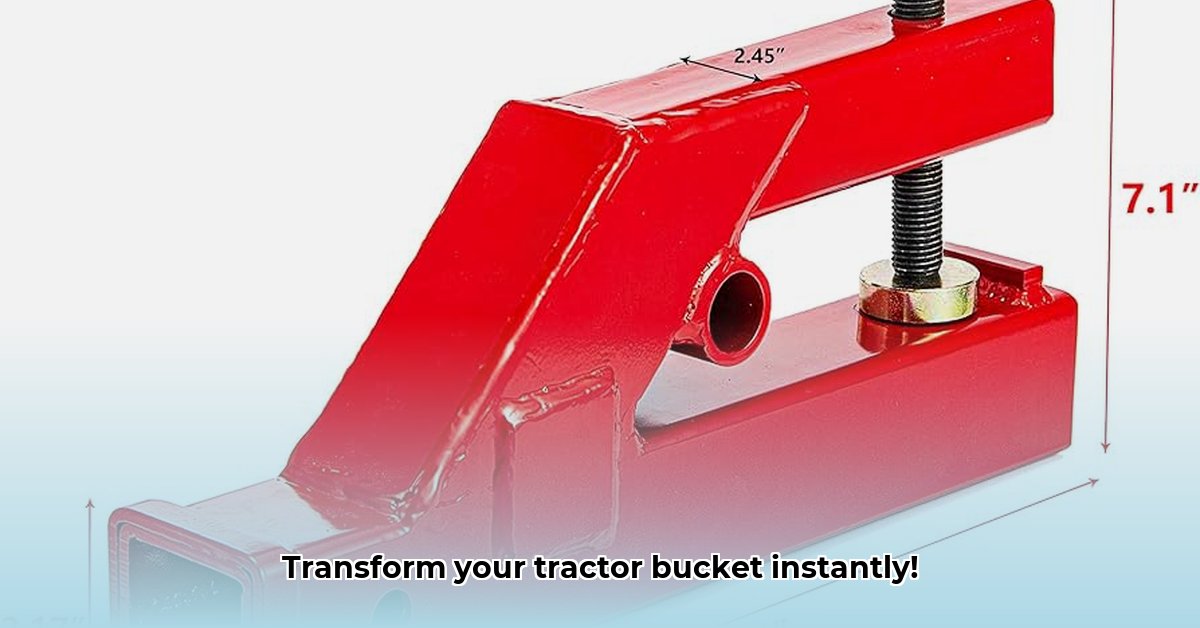
Understanding Clamp-on Trailer Hitches for Tractor Buckets
Ready to unlock the hidden potential of your tractor bucket? Clamp-on trailer hitches transform your standard bucket into a versatile towing system, significantly expanding your tractor's capabilities without the expense of buying additional equipment. This comprehensive guide will cover everything from selecting the right hitch to safe installation and operation. We'll even tackle troubleshooting and maintenance to ensure years of safe and efficient use. For more tractor implements information, check out this helpful resource.
The Advantages and Disadvantages of Clamp-on Hitches
These ingenious attachments offer several key benefits, but it's crucial to understand their limitations as well.
Pros:
- Enhanced Versatility: Haul materials, transport light equipment, and even pull small trailers – all using your existing tractor bucket. This boosts efficiency and eliminates the need for specialized implements for every task.
- Cost-Effectiveness: Often a more budget-friendly option than purchasing dedicated trailers or attachments.
- Ease of Use: Quickly attach and detach the hitch, seamlessly switching between towing and standard bucket operations.
Cons:
- Limited Towing Capacity: These hitches aren't built for heavy-duty towing. Exceeding the weight limit is exceedingly dangerous and could result in serious damage or injury. Always check the manufacturer's specifications.
- Compatibility Concerns: Not all hitches are compatible with all tractor buckets. Precise measurements are crucial to avoid costly mistakes and safety hazards.
- Potential for Damage: Improper installation or overloading can damage both the hitch and your bucket. Care and attention to detail are crucial.
Choosing the Right Clamp-on Hitch: A Buyer's Guide
Selecting the right hitch requires careful consideration of several key factors. Remember, safety is paramount, so don't cut corners.
Towing Capacity: This is the most critical factor. Determine the heaviest loads you anticipate hauling and choose a hitch with a significantly higher capacity to allow for a safety margin. "Overload protection is far cheaper than replacement equipment, or worse," states Dr. Emily Carter, Agricultural Engineering Professor, Purdue University.
Bucket Compatibility: Before purchasing, carefully measure your bucket's dimensions and compare them to the hitch's specifications. A mismatch will result in an unsafe and likely unusable setup.
Ease of Installation: Some hitches are designed for quick and easy installation, while others require more time and effort. Consider your skill level and how frequently you'll change between towing and other operations.
Price: Prices vary considerably. While cheaper options may be tempting, investing in a high-quality hitch made from durable materials is a worthwhile investment in your safety and long-term operation.
Build Quality: Look for hitches constructed from heavy-duty steel or high-strength materials to withstand significant stress. Check online reviews to gauge the durability and reliability of different brands.
Here's a sample comparison table (note that specific models are widely variable in their capacity, features and cost — always check the manufacturer's specifications):
| Feature | Model A | Model B | Model C |
|---|---|---|---|
| Towing Capacity (lbs) | 1000 | 1500 | 2000 |
| Material | Heavy-duty Steel | High-Strength Steel | Reinforced Steel |
| Compatibility | Most standard buckets | Most common bucket types | Specific bucket models |
| Installation Time (min) | 5 | 10 | 15 |
| Approximate Price ($) | $120 - $180 | $180 - $250 | $280 - $350 |
(Note: This table is for illustrative purposes only. Actual specifications and pricing may vary depending on product availability and region. Always verify information on the manufacturer's website.)
Installing Your Clamp-on Hitch: A Step-by-Step Guide
Safety is paramount throughout the installation process. Always wear safety glasses and follow the manufacturer's instructions precisely.
Preparation: Thoroughly clean the bucket, removing any debris that could interfere with the hitch's secure clamping. Inspect the bucket for any damage that could compromise its structural integrity.
Positioning: Carefully align the hitch with the bucket’s lifting arms, referencing the manufacturer's diagram. Precise alignment is essential for safe and effective operation.
Secure Clamping: Tighten the clamps firmly and evenly. Avoid over-tightening, which could strip the threads or damage components. The clamps should be secure with no visible movement.
Testing: Before using, test the installation by gently rocking the hitch. Any looseness indicates the need for adjustment or correction. If you're unsure, seek professional help.
Safe Operating Procedures, Maintenance, and Troubleshooting
Safe operation, consistent maintenance, and prompt troubleshooting are vital for ensuring the longevity and safe use of your clamp-on hitch.
Load Limits: Never, ever exceed the hitch's stated towing capacity. This is the most critical safety precaution. Consequences can range from equipment damage to serious injury.
Safe Towing Practices: Avoid sudden movements. Be cautious on uneven terrain, and always be aware of your surroundings.
Regular Inspections: Regularly inspect the hitch for wear and tear, including loose bolts, cracks, or rust. Address any issues promptly. Lubricate the moving parts to prevent seizing.
Troubleshooting:
- Loose Hitch: Re-tighten the clamps. If the problem persists, there might be damage requiring replacement.
- Uneven Clamping: Re-check clamp tightness to ensure even clamping pressure.
- Bucket Damage: Inspect the bucket for any damage affecting the hitch's stability. Repairs or replacement may be needed.
Conclusion: Maximize Your Tractor's Potential Safely
A clamp-on trailer hitch for your tractor bucket can significantly boost your efficiency and versatility. However, responsible operation and proper maintenance are absolutely critical to ensure safe and effective functioning. By following the guidance in this article and adhering to the manufacturer's instructions, you can enjoy the benefits of enhanced capabilities while mitigating risks. Remember that safety should always be your top priority.